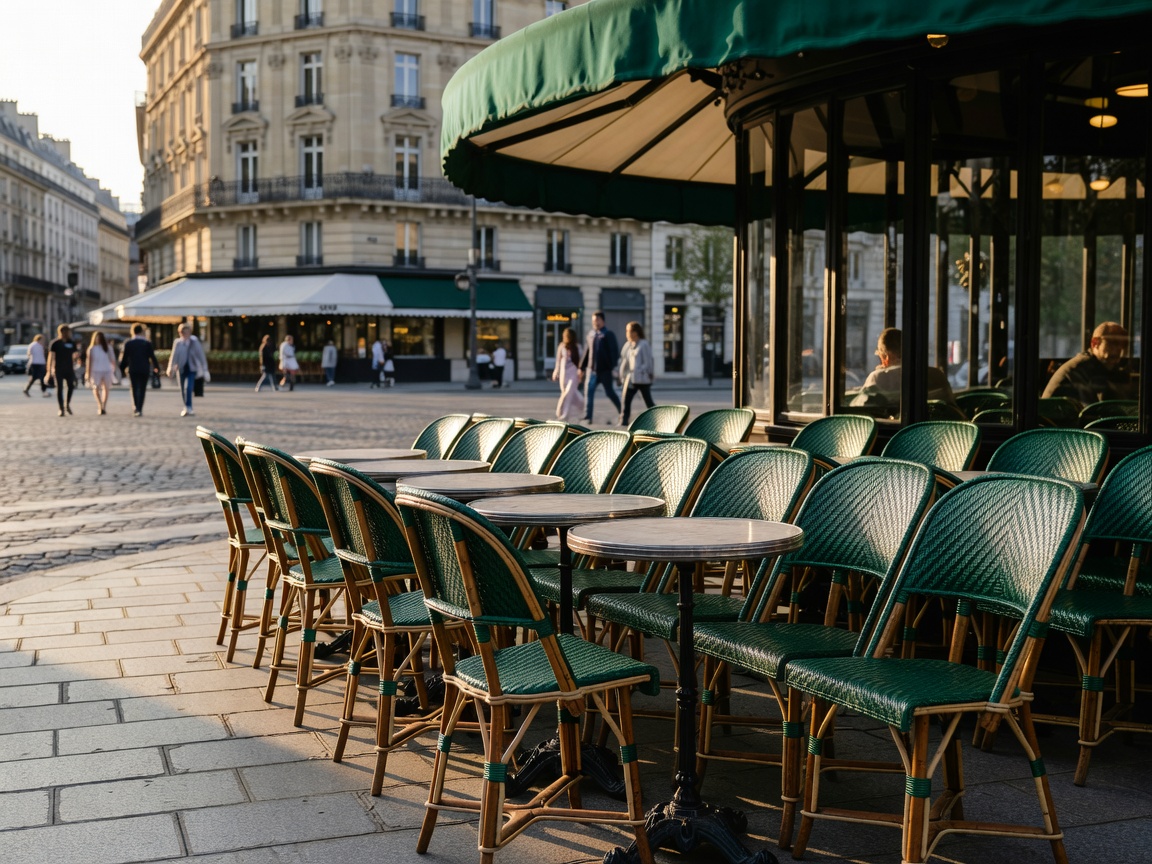
Café de Flore
The cornerstone of Saint-Germain-des-Prés intellectual life. Renowned for its Art Deco interior, steaming café crème served in porcelain, and legendary patronage by Sartre, de Beauvoir, and Camus.
Step along Boulevard Saint-Germain, Place de l'Opéra, and the historic Latin Quarter. A curated compendium of Paris’s most storied establishments, where existentialist philosophy, Belle Époque architecture, and grand café culture converge.
From Left Bank literary salons to the gilded Belle Époque halls of the 9th arrondissement, these institutions embody the ritual, culinary craft, and architectural elegance of Paris.
The cornerstone of Saint-Germain-des-Prés intellectual life. Renowned for its Art Deco interior, steaming café crème served in porcelain, and legendary patronage by Sartre, de Beauvoir, and Camus.
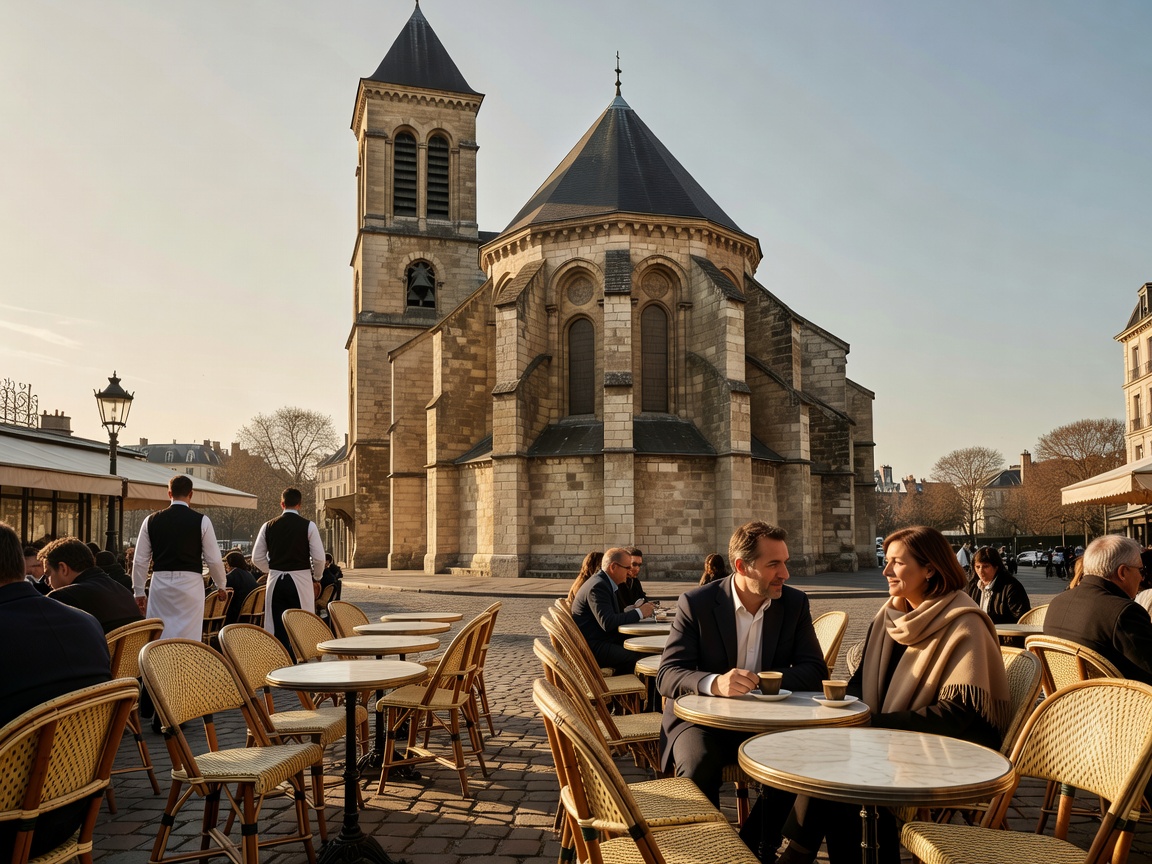
Directly overlooking the ancient Romanesque abbey tower, Les Deux Magots remains synonymous with 20th-century literature, artisanal hot chocolate poured at table, and traditional French service.
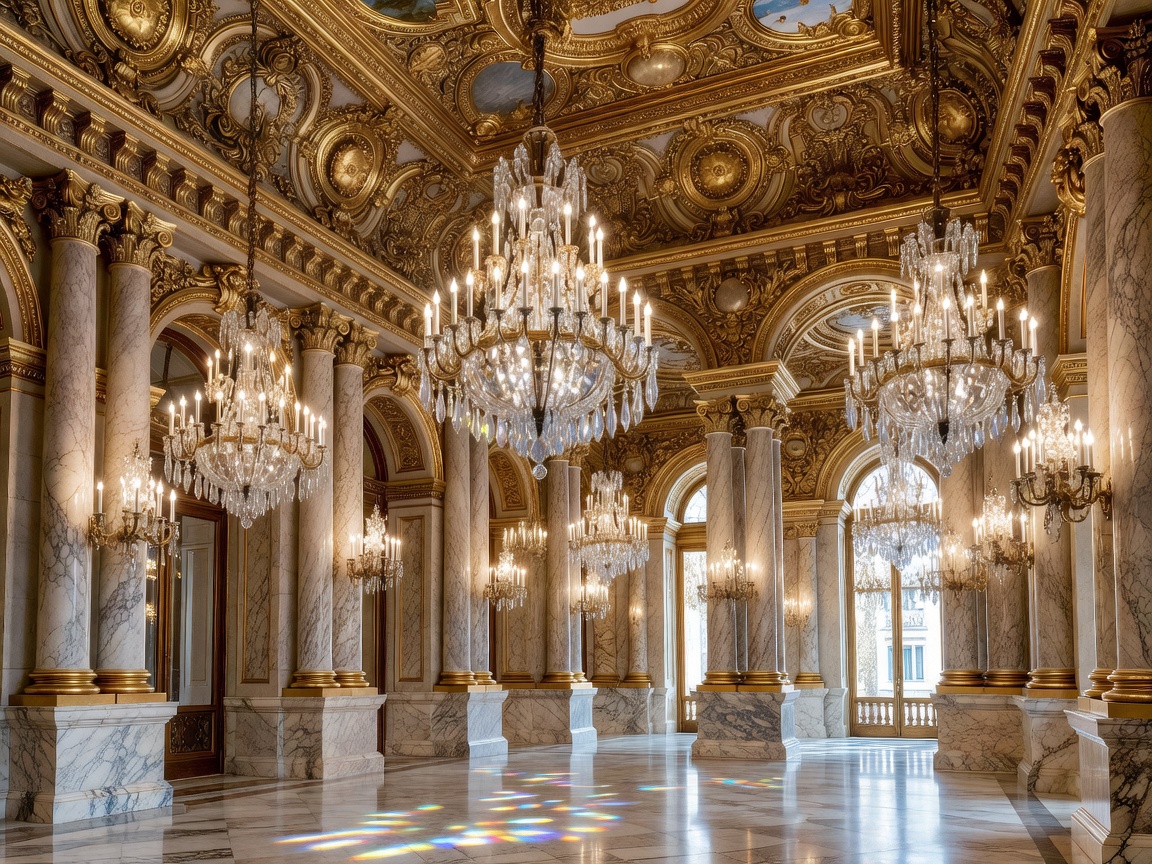
Commissioned under Napoleon III and designed by Charles Garnier's architectural circle. A grandiose monument featuring gold-leaf stucco, Mille-feuille pastry, and unmatched views of Palais Garnier.
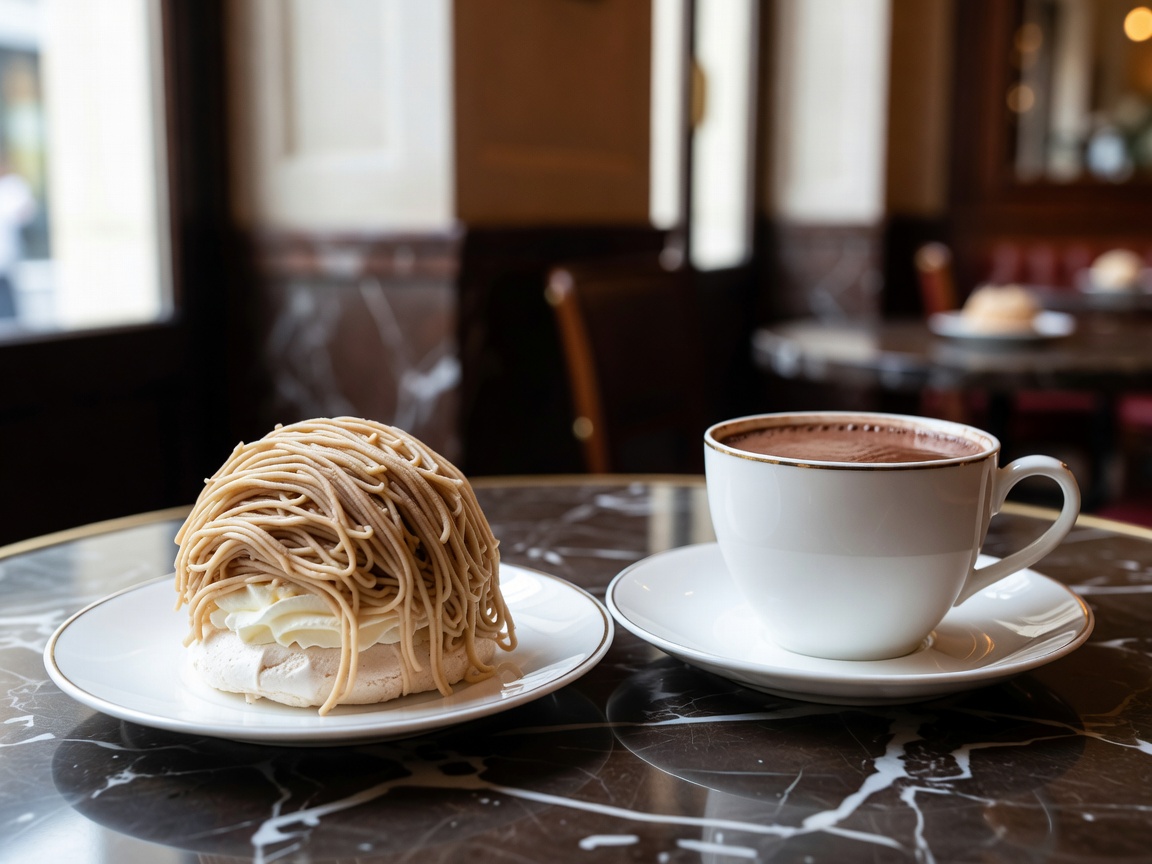
The pinnacle of Belle Époque tearoom elegance on Rue de Rivoli. Celebrated worldwide for its thick African Hot Chocolate "L'Africain" and delicate meringue chestnut Mont-Blanc pastry.
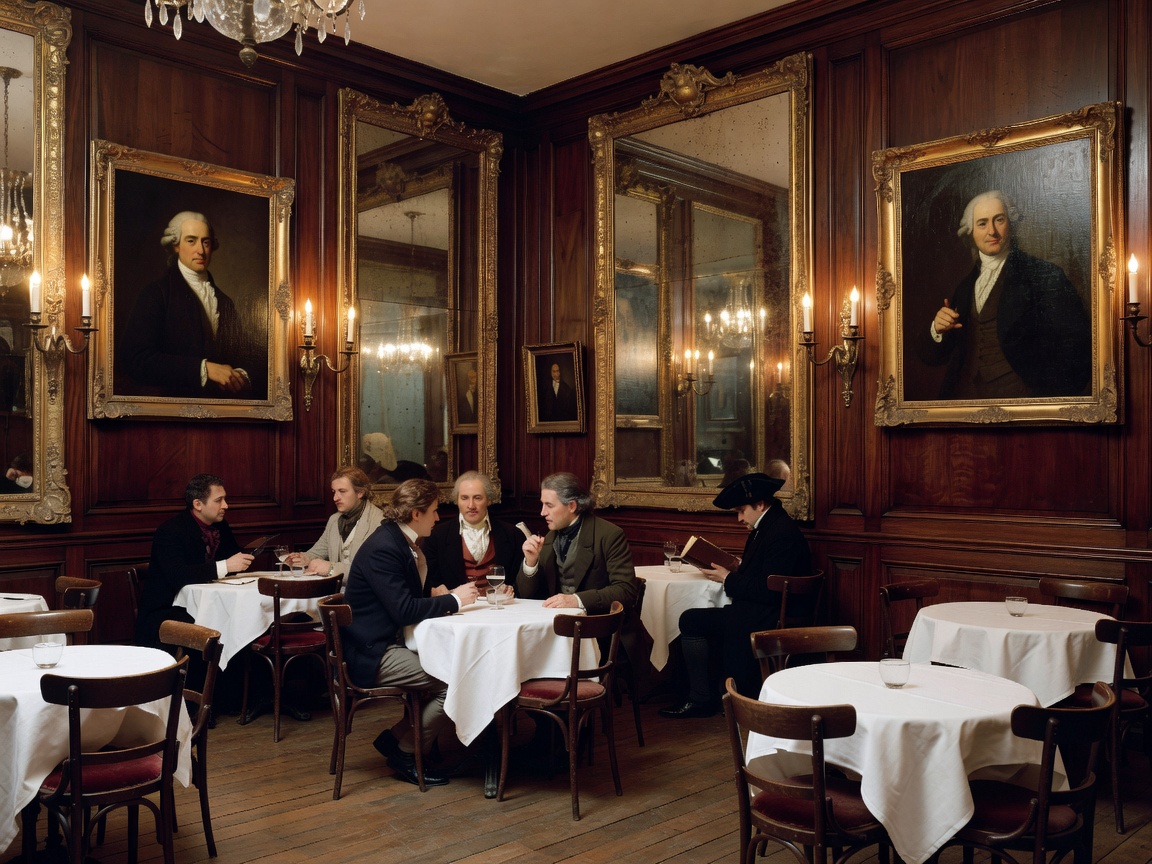
The oldest continuously operating café in Paris. Where Voltaire drank dozens of cups of coffee daily, and Enlightenment luminaries Rousseau, Diderot, and Benjamin Franklin shaped modern thought.
Sitting at a Parisian café is neither an errand nor a rushed transaction; it is an essential civil right practiced with solemn pleasure.
Unlike quick-service take-away coffee cultures, the Paris café terrace functions as an extended living room. Once you occupy a tiny round marble guéridon table and place an order, you have rented that vantage point for as long as you wish. Waiters dressed in traditional black vests and white aprons will never place your bill on the table unsolicited.
Ordering coffee in France follows precise linguistic conventions. Requesting simply "un café" will unfailingly yield a single shot of dark, rich espresso served with a small sugar packet and often a square of dark chocolate:
Prices in traditional Parisian cafés vary depending on where you sit. Consuming an espresso standing at the zinc counter (au comptoir) is typically half the price of enjoying it seated outside on the heated terrace (en terrasse) or within the grand salon interior (en salle).
Each Paris district carries a distinctive tempo, architectural silhouette, and gastronomic character.
Home to Café de Flore, Les Deux Magots, and Le Procope. Literature and philosophy.
Home to Angelina on Rue de Rivoli. Aristocratic salons and imperial tea culture.
Home to Café de la Paix. Haussmannian splendor, opera patrons, and gilded ceilings.